|
HISTORY OF MEAD |
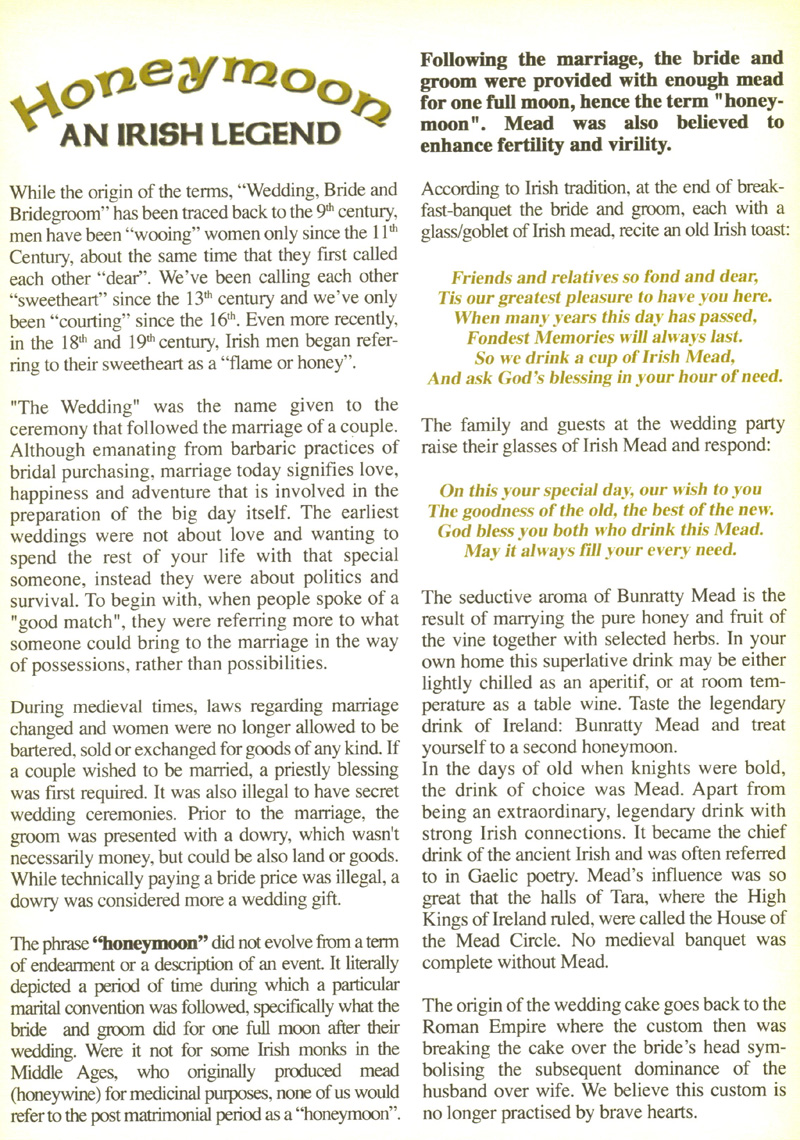
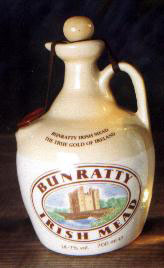
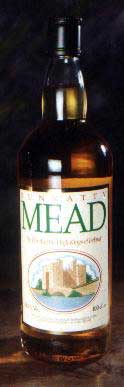
Bunratty Mead is a traditional wine, produced from
an ancient Irish recipe of pure honey, fruit of the vine and
natural herbs. It's a medium sweet wine, with a wide taste
appeal, and suitable for all important occasions. As the drink of
the ancient Celts, Mead derives much of its appeal through Irish
Folklore, which is legendary of this mystical drink with strong
attachments to Ireland.
In the days of old when knights were bold, the drink of choice was mead. Much more than an extraordinary legendary drink with strong attachments to Ireland, mead can be traced back as many centuries before Christ. It became the chief drink of the Irish and was often referred to in Gaelic poetry. Mead's influence was so great that the halls of Tara, where the High Kings of Ireland ruled, were called the house of the Mead Circle. Its fame spread quickly and soon a medieval banquet was not complete without it. |
|
|
Even the church recognised the value of this fabulous drink. Legend has it that St. Finian lived for six days a week on bread and water, but on Sundays ate salmon and drank a full sup of mead. In addition, St. Bridget performed a miracle when mead could not be located for the king of Leinster. She blessed an empty vessel, which miraculously filled with Mead. |
MEAD
- THE WEDDING STORY However the expression "Honeymoon" may be older than most of the terms above. The phrase "Honeymoon" did not evolve from a term of endearment of a decryption of an event. It literally depicted the period of time during which a particular marital convention followed; specifically what the bride and groom did for one full moon after their wedding. If not for some Irish monks in the Middle Ages, none of us would refer to the post-matrimonial period as a "Honeymoon". Although it is said that the monks originally produced Mead for medicinal purposes, its popularity soon proved that it could make even people who were well, feel even better. Not to say that weddings would have been altered if Mead were not invented, it's more that the nature and quality of the celebration following the wedding would have been affected, the honey-based drink was the origin of the term "honeymoon". Even since the fame of the Irish monks' "brew" spread throughout medieval Ireland, it was believed that mead was essential for sending off the bride and groom after wedding. It was used both as a final toast and as a proper beginning of the marriage. Following the wedding, the Bride & Groom were provided with enough Mead to toast each other after their wedding, hence the term "honeymoon". This delicate, yet potent drink was not only considered the best way to start a new marriage, it was also believed to enhance such valued qualities as fertility and virility. On numerous occasions the groom laced with generous amounts of Mead, was carried by his friends to the bedside of his bride. If nine months later, a bouncing baby appeared, credit was given to the Mead. References have been found on Mead as early as the 5th century and it was in wide use by the Middle Ages. So it seems that the "Honeymoon" tradition may be even older than our contemporary wedding traditions. According to Irish tradition, when it's time to bring festivities to a close, the wedding party gathers around the bride and groom. All fill their glasses with Mead; |
| The newly wedded couple
raise their new honeymoon goblets and, if they wish,
recite an Irish toast; Friends
and relatives |
B U N R A
T T Y
|
The family and guests in
the Wedding party raise their glasses of Mead and respond: On this you're special day, Our wish to you, The goodness of the old, The best of the new, God bless you both, Who drink this Mead, May it always fill Your every need. |