


You have reached our old website.
Please visit our new site at www.goodwin-arborist.com
Tree Management
Management begins with an inspection. Good management is about knowing what trees you have, and using your money effectively to conserve and enhance their safety, health and beauty. Inadequate inspections and surveys, and lack of knowledge in assessing the condition of trees and their best management, result in poor management. Good management is NOT about spending lots of money on tree surgery work and then doing nothing for 10 years. We believe good management is about assessing trees in a knowledgeable way, implementing the minimum tree work required, and then having regular check ups (monitoring).
Planned, pro-active and cost-effective tree management represents a responsible and legally defendable management programme. This begins with an inspection, ideally by an expert person unconnected with tree surgery contracting work. Landscape trees are often in critical locations and remedial tree work may be called for, either for reasons of tree safety & health or nuisance. Typical tree work operations include pruning, felling/dismantling and cabling - performed by tree work contractors ('tree surgeons'). The benefits of tree pruning work should outweigh the damage done to the tree, and assessing this requires knowledgable and objective judgement. Tree work should always be a treatment - an informed solution to a tree problem; even if, as in the worst case, it means felling/removal.
As consulting arboriculturists we are concerned with best practice tree management; we are not looking for 'tree work'. We assess trees, report on their condition and specify any tree works that are really needed for their safety or health. For large sites/tree populations, it is often beneficial to initially assess the site and decide on which trees actually need surveying and the detail of inspection required. Following a survey, we can refer necessary tree work to leading local reputable tree surgeons. Where required, we can also draft the work schedule and contract documents for tender, and supervise their performance of the contract.
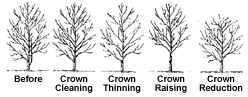
Mature tree stems differ in their anatomy and physiology to young stems. Severe and irreparable damage can be done to semi-mature and mature trees by mal-pruning. To destroy the form and health of trees by indiscriminate inexpert 'lopping and topping' only creates ugly trees with future safety problems. There is always a better, informed solution. There is a world of difference between good, professional tree work and ignorant mutilation. Proper tree work requires great skill and judgement. Never let anyone attempt any tree work that they are not trained or insured to perform.
